

The TwoSix team is back and ready to share what’s On Our Radar for January so that you can stay ahead of the always-evolving digital marketing landscape. This month, the TwoSix team discusses GA4 Ghost Traffic, Pinterest TV, ChatGPT Ads, and more! Keep reading to find out what we’re keeping On Our Radar for January 2026.
 Brian Matson
Senior Director of Strategy & Education
Are Hashtags Officially DOA?
We’ve watched the influence of hashtags slowly fade for years, but Meta just made it official. Instagram is moving to limit hashtag use to just five per post. The days of “spraying and praying” by leveraging dozens of small, medium, and large tags to hack the algorithm are officially over.
Now, specificity is the only way to go. Instead of packing captions with generic tags, you have to get ultra-specific to align with your content’s theme. This is a major shift for destination marketers who are used to leaning on broad city names and brand identities. The hard truth? Those broad tags haven’t been moving the needle on discovery for a long time anyway.
Are hashtags dead? As a distribution engine, yes. But they are still useful in an organic way to categorize content for your super-niche groups of users. Today, AI is doing the heavy lifting, scanning your visuals and captions to find your audience for you. In 2026, trying to “game” the system with a block of tags is officially a relic of the past. Today, your content has to stand on its own feet. There are no more shortcuts or “wishes on a star” that can save you. The bar has never been higher, and your reach now depends entirely on creating compelling, engaging content that actually resonates with online users.
In 2026, be sure to adjust your strategy if you haven’t already:
- Think in terms of keywords first and then hashtags: Think “Hidden Waterfall Hikes” instead of just “#Travel” or “#waterfall”
- When using hashtags, the more specific the better: Instead of just “#beer” think “hazyIPA”.
- Use the human voice in your content to help inform the AI about your posts
- Most importantly, you need to gain attention early with your content. The first three seconds of your video need to sink the hook. No amount of hashtag use is going to do that for you. It’s up to you to create great content.

Lead Content Strategist & Senior Data Analyst
The “Ghost Traffic” that Distorted Your 2025 Reports
Did your traffic in GA4 jump at the end of December 2025? You’re not alone. Essentially every website got hit with bot traffic from China and Singapore — typically spiking right around December 15. It isn’t necessarily harmful; it just slipped through Google Analytics’ filters and is characterized by extremely low engagement rates and time on site. Hop in your Google Analytics and go to Reports > User > User Attributes > Demographic details to see if your GA4 was affected.
Unsurprisingly, with such bad engagement figures, you’re going to want to filter it out to avoid have inauthentic and inaccurate data dragging down your stellar 2025 web traffic. Unfortunately, Google Analytics 4 data is a one-way street. There’s not a way to go back and re-write or delete data. So, I’ll show you how to filter it.
Luckily, it’s really straight forward. On any report in GA4, simply go to “Add filter” at the top, and then go over to the right, where it says “Build filter”. Under “Dimension”, search for “Country” and click it. Then, under “Match Type”, select “does not exactly match”. Next, under “Value”, select “China” and “Singapore”. Finally, click “Apply” at the button, and — voilà! You’ve successfully filtered out China and Singapore. Just be sure to make this filter each time you’re looking at it. There are more advanced, repeatable ways to do it, but this is the quick and dirty.
 Scout Delicato
Lead Digital Marketing Strategist
As Seen on Pinterest TV?
Pinterest just announced Bring My Pinterest to Life, a new Roku series that takes real people’s boards and turns them into actual projects on screen. On the surface, it looks like a lifestyle play or interesting tactic for attracting platform growth. But, this is one of just a few recent signs that Pinterest is up to something much bigger.
The timing is not random. With Pinterest moving to acquire tvScientific, it is obvious they are not just experimenting with a one seasons show. They are building toward a real CTV ad ecosystem, one that uses the same thing Pinterest has always done better than most platforms, predictive intent, but applies it to a format brands have historically struggled to measure and optimize. CTV has been big on reach, but fuzzy on impact. Pinterest seems to be betting that it can bring clarity to that gap.
For anyone managing brand platforms and communities, or running paid campaigns, this is worth paying attention to. CTV is a space that most other social media networks has avoided integrating into their own systems, even with the major pushes to video content we’ve seen across the internet in recent years.
If this works, it could change how brands think about CTV altogether, not as a top-of-funnel awareness channel, but as another place where discovery, planning, and purchase start to blend together. Pinterest has always been strongest when people are in “future mode,” planning trips, projects, and life changes. Bringing that mindset to the living room screen is an interesting next step we will be paying close attention to.

Digital Advertising Strategist
Find Yourself in Pins
I’ve covered Pinterest quite a bit over the past couple of years, how it is one of the only social media platforms to be designed to make you happy and stop the doomscroll and that it’s a surefire way to find a millennial audience. Well Gen Z is hopping on that train to escape the algorithm. In an attempt to ditch the trends and let an algorithm decide what you’ll see, Gen Z is heading to Pinterest discovery to get back in touch with their own taste. They’re leaning into strong visuals in which they can curate something themselves instead of it being fed to them. Pinterest says they try to be more personal and less performative because you’re searching for your own interests and not at the hands of an algorithm. Now sometimes the algorithm gets it right but sometimes it can lose track of its intended audience if you linger a second too long on a video. TikTok has also become a powerful search engine, leading to similar discoveries as Pinterest. There’s something different about Pinterest though, it’s slower, it’s quiet. It’s somewhere I find myself going when I need an escape from the chaos. It’s almost comforting like when you watch your favorite show or eat your favorite meal. Knowing that Pinterest is successfully setting themselves apart from other platforms, you can use this to your advantage when posting organically or running ads. Knowing how your audience operates and what they’re looking for can help create a successful campaign.

Director of Social & Email Marketing


Send Trustworthy Emails with BIMI in 2026
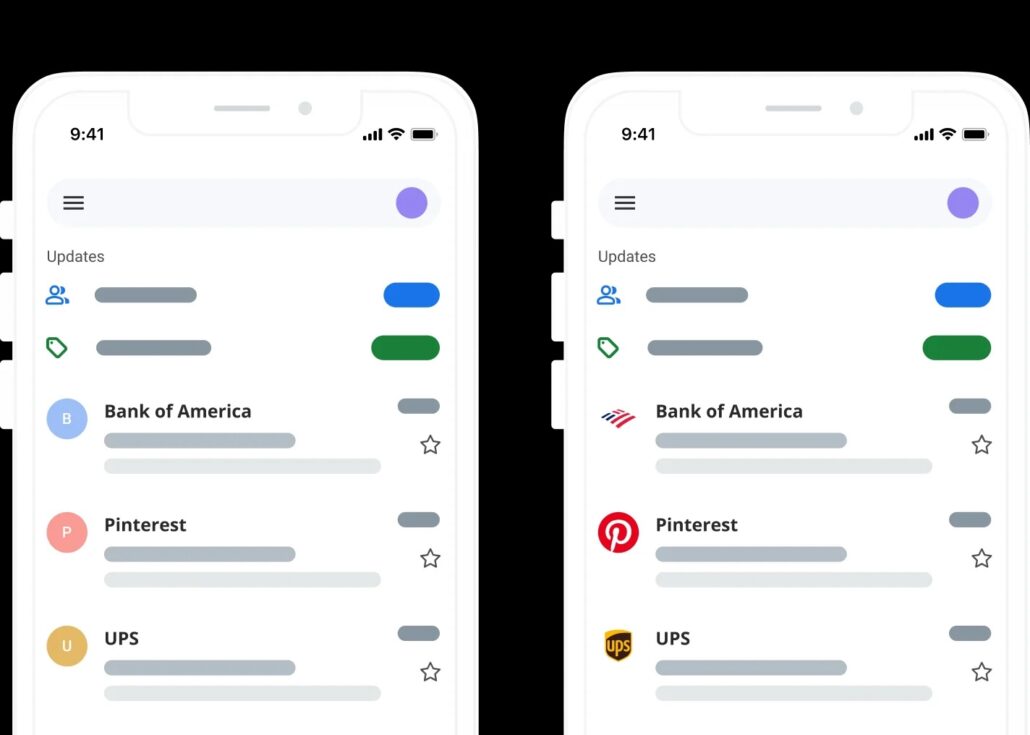
Privacy and trust have been two huge factors playing into successful email marketing in recent years. If your DMARC is authenticated, you have a transparent sign-up process, and you are keeping a clean contact list… what’s the next step to build trust with your audience in 2026? Well, it might be BIMI.
BIMI stands for Brand Indicators for Message Identification, which, in simpler terms, means an email standard that allows brands to display a verified logo next to their emails, as shown below:
www.mailjet.com
While BIMI has been around for a while, trust is becoming more and more of a concern when it comes to digital marketing. If you have been looking for new ways to increase your brand recognition and trust with your audience BIMI is a great tool to look into for your 2026 email marketing strategy!
Click the button below to check out the top trends and tips for your email marketing efforts in 2026.
 Emma Herrle
Digital Marketing Strategist
Sponsored Content in LLM’s
Like many of the most widely used platforms on the web, OpenAI will soon look to monetize its free user base. ChatGPT is expected to begin showing sponsored content in 2026. It currently has over 800+ million weekly active users and processes 1 billion searches per week. That’s big business in an attention economy. Though unconfirmed, there are rumors of what ad formats may look like.
OpenAI isn’t alone. It’s expected that sponsored content will soon become a very standard part of any AI conversation. Shopify just announced the Universal Commerce Protocol. Co-developed with Google, it allows Shopify to power commerce across any channel (including AI platforms), using a single backend for products, customers, orders, and payments. In short, the big idea is to enable native shopping experiences directly within AI conversations on platforms ChatGPT, Gemini, Copilot, Google’s AI Mode, and more.
This moment feels a lot like the early days of social media, when platforms like Facebook and Instagram were still ad-free playgrounds for brands and users. Over time, those platforms gained popularity, monetized attention, and leaned on an extensive library of user data. Today, it’s almost hard to remember Instagram and Facebook without ads. AI platforms are on a similar trajectory, and the cornerstones of a new advertising ecosystem are already set into place.
 Sydney Van Hulle
Digital Advertising Strategist
Short-Form Video Still Reigns Supreme
If you haven’t incorporated videos into your organization’s marketing strategy yet, now’s as good a time as any to get started.
Even with the TikTok ban constantly looming, users are still spending more time there (on average) than any other social media app. YouTube Shorts are now being viewed over 200 billion times per day. Meta has particularly made a huge push for video content over the last few years (much to the dismay of users who long for the chronological static image feeds of yesteryear). Reels now account for 50% of all time spent on Instagram and they are now the primary engagement on Facebook.
Videos don’t need to be heavily edited or polished, they just need to showcase your CVB’s personality in some way, shape, or form. And they don’t need to be lengthy, a 15-30 second video will suffice. Capturing a sunrise over the coastline. Walking through a festival taking place downtown. A spotlight on coffee shops in the area.
Short-form video meets travelers where they already are and offers up inspiration in a way that feels authentic and easy to consume. They can guide potential visitors through the journey of discovery, going from “I didn’t know this place existed” to “I need to book a trip there.”