
The TwoSix team is back and ready to share what’s On Our Radar for June so that you can stay ahead of the always-evolving digital marketing landscape. This month, the TwoSix team discusses early holiday promotions, Meta tools, Instagram Plus, and more! Keep reading to find out what we’re keeping On Our Radar for June 2026.
 Brian Matson Senior Director of Strategy & Education
 To check the box or not to check the box?
It’s one of those YouTube settings that has a lot of discussion in online forums. This topic recently became a bit of a talking point at the One West Alliance’s MarTech Summit. The main question was: If your YouTube Channel has been inactive for an extended period of time, should you publish your new uploads to your subscriptions feed and notify them? Or should you avoid doing so to allow YouTube to find you a fresh audience? There are some very strong opinions on the matter!

The #1 reason content creators are discouraged from checking that box is that it’s believed that those subscribers from long ago are no longer engaged. Why inform an inactive audience segment? The point seems very reasonable on the surface. It makes sense, but after a bit of testing, the best practice revealed itself pretty quickly.
The short answer is, check the box. It’s really that simple. After testing a dozen uploads on a variety of YouTube channels, the videos without the check box checked had a very difficult time gaining reach. It wasn’t even close. This was true for both traditional YouTube videos and Shorts. Without the checkmark, a video would get fewer than 100 views in the first 48 hours. With the checkmark, the videos would soar to multiple thousands of views. It was consistent, didn’t matter based on the content type, and was the single biggest factor in whether or not a piece of content got delivered aside from sound SEO optimization.
If you think about it, this actually makes sense for DMO Channels. Those who subscribed long ago probably had some sort of affinity for the destination. Just because the Channel hasn’t been active doesn’t mean they no longer care. This small base of subscribers still tends to be highly engaged. When alerted, they watch. Their engagements provide a healthy initial loadout of data to YouTube that your video is popular. Much better than a fresh audience without brand or destination recognition.
Because we are constantly chasing the benchmarks of a 4% CTR and 70% retention rate the first 48 hours, those early engaged users are vital to the long-term success of uploaded content. In my opinion, check the box. It’s been pretty much cut and dried as far as video upload performance goes. The old subscriber base is still valuable on YouTube. Alert them.
 Nick Danowski Lead Content Strategist & Senior Data Analyst
What to Know & Do about the World Cup
The 2026 FIFA World Cup is officially here, and the US is finally starting to feel the hype. The first thing to know — you can’t ignore it. It is massive. Colossal. The 2022 World Cup final was watched by 1.5 billion people (12x more than the Super Bowl). This year, the tournament is 50% bigger, with 48 teams rather than 32 teams playing. There are going to be 2-6 games each day for 2 weeks, then around 1 game per day until it ends on July 19.
Destinations and organizations should know how it’ll affect their marketing and what opportunities it offers.

The first thing to know: if your destination has a historical connection to a competing country, lean into that authentically. Show off cultural moments. It’ll almost certainly do numbers on social media.
The second thing to know: big teams will come crashing out of the tournament. There are always upsets and many fans will have planned to stay in the USA much longer. That’s really the only time that destinations outside host cities will be able to maybe earn some visitation. If your Spains, Germanys, Englands, Argentinas, Brazils, etc. get knocked out of the group stage, pay attention if you’re near where they’ve been playing.
The third thing to know: it will become too much and, for many people, there’s going to be “World Cup burnout”. Personally, I believe the tournament is just too big after the increase in teams and 104 matches is ridiculous — and I’m a huge soccer / football fan. Escapism content will almost certainly work really well about 10 days into the tournament.
The fourth thing to know: CPMs will go up as major brands spend huge amounts of money to capture attention.
The fifth thing to know: watch parties are going to be very important. Tickets are way too expensive. Historically and probably artificially too high. Most people will be looking for a way to congregate, so give them opportunities. Especially make sure your partners know when the USMNT plays.
All that said, strap in. It’s going to be a wild 39 days. And remember: why not us?
 Scout Delicato Lead Digital Marketing Strategist
Meta Got Caught. Should Marketers Be Paying Closer Attention?
So here is what happened in the last two weeks. Wired reported that Meta had quietly slipped facial recognition code into the back-end of its Meta AI app that powers Meta Glasses. The code was not active yet, but it was staged and ready to go. Meta’s spokesperson fired back at Wired, calling the reporting “shoddy,” “intellectually dishonest,” and “pure advocacy-driven clickbait.” Then in an update that same week, Meta removed the code.
So, they called the journalists liars and then did the thing the journalists said they did. Nice.
For marketers, the instinct might be to file this under “platform drama, not my problem.” But this is becoming a familiar pattern this year, and we’re only halfway through. Last month, Meta reported its first ever loss in daily active users, attributed it entirely to external factors, and moved on. Meanwhile, Advantage+ and AI-driven ad automation have been steadily swallowing more of the controls that advertisers used to have, often implemented by default and without much notice. And now this.
None of these things are necessarily catastrophic on their own. Meta is still an enormous platform with genuinely powerful targeting. The theme in each of these stories is a platform that is increasingly making decisions on your behalf, quietly, and counting on you not to look too closely. For DMOs putting serious budget into Meta, that is worth at least keeping one eye on.
The destinations in the best position are the ones building audiences and data they actually own, so that when the platform does something unexpected, and it will, they are not starting from zero.
 Ashley Maddix Digital Advertising Strategist
Christmas in June?
Am I really talking about Christmas even before Christmas in July? Yes, indeed I am.
I’ve written about this before, the advantages for promoting big holidays like Christmas well in advance do pay off. Last year, we started promoting Christmas in Santa Claus, Indiana in the early fall and saw the best results we had in 4 years because of the early push on Pinterest. Pinterest is going a step further and is encouraging campaigns to start 6 months in advance to see increased benefit. They’re citing Pinterest as the planning app, where people come to gather ideas early.
Now, we’ve always preached and practiced the power of always on campaigns. These campaigns not only stay top of mind by consistently targeting consumers throughout multiple seasons, but it allows the platform to continue learning and delivering to the most compatible audience. We’re still seeing a mix of how far ahead people are planning. Many are last minute purchasers often looking at things like weather or events before booking. But for the planners who are looking further ahead it certainly couldn’t hurt to start promoting early. Especially for events like Christmas, where people may be trying to coordinate a large family gathering.
For the price of a few negative comments you may get, it’s worth trying, especially if you’re a Christmas-centric destination like Santa Claus, Indiana. We probably will see a big uptick in the November and December months but by planting the planning seed early we have and will continue to see better results.
 Makenna Schmitz Director of Social & Email Marketing


Constant Contact Ticketless Events
For DMOs promoting local happenings, free events can often be tricky to track. You may call out the event in your email newsletters, but if there’s no ticket or registration process, it can be difficult for event organizers to estimate attendance, plan staffing, or measure success. Constant Contact’s new Ticketless Events feature could help marketers overcome this hurdle!
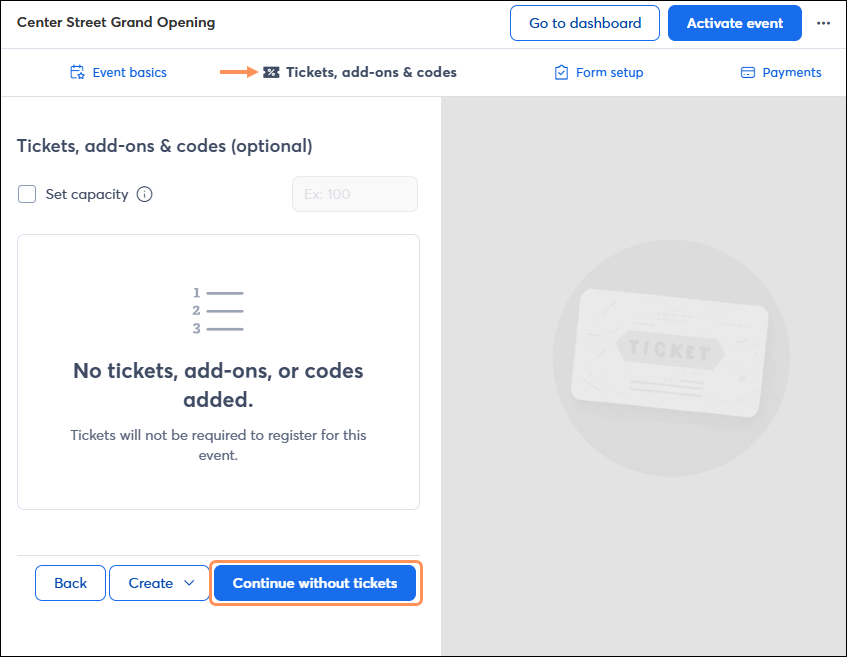
Constant Contact users can now create events in the platform and select “continue without tickets”. This update allows users to create simple RSVP-style events, making it easier to collect basic attendee information and get a better idea of how many attendees to expect.
For destinations, this could be especially helpful for things like free community events, seasonal celebrations or festivals, walking tours, store openings, meetings, and so many other events where a headcount is useful but a formal ticketing process is unnecessary. Instead of linking to an event listing, DMOs can now include an RSVP call-to-action in their newsletters and help partners gather more accurate event data. We love to see a useful update!!
It’s a small change, but one that could make an impact on how you organize and measure success for local events. If you give Ticketless Events a try, let us know how you like it! And as always… if you need any assistance with your email marketing strategy, reach out! We’re always happy to help.
 Emma Herrle Digital Marketing Strategist
 How Meta’s Describe Your Audience Tool Works
Meta’s new “describe your audience” feature began gradually rolling out in April, and it seems to be a hopeful replacement for their detailed targeting setup. That means that instead of stacking interests or behavioral segments from a list, advertisers can use natural language to describe who their ads should reach.
When available, the option appears at the ad set level in the audience targeting section exactly where detailed targeting would have been before.
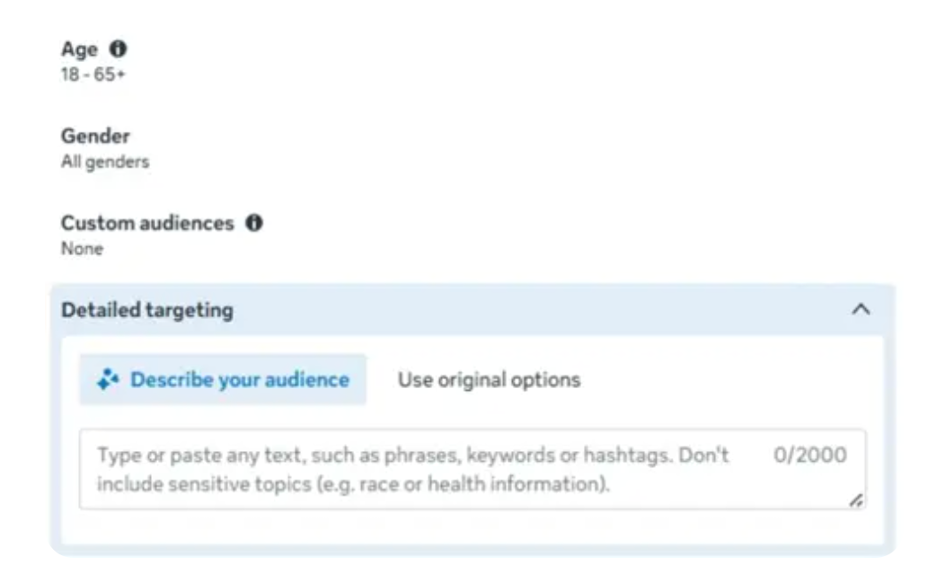
For beginners looking to try the feature, it is recommended to test it in a separate ad set, and keep in mind that the tool should be an output for customer research, not a replacement for it. Advertisers still need to do the research and build the detailed framework of their audience personas.
Meta’s release is just the tip of the iceberg. It reflects a broader shift toward natural-language targeting inputs like these that are also present in other platforms like Google and Pinterest. For more about how this impacts advertisers’ control, check out The Rise of AI Targeting and “Describe Your Audience” Inputs: Are Advertisers Losing Control or Gaining Performance?
 Sydney Van Hulle Digital Advertising Strategist
Instagram Plus: To Pay or Not to Pay
Instagram recently announced and officially rolled out their new paid subscription model called Instagram Plus. For a minor fee of $3.99/month, users can gain access to features that can [potentially] help them get in front of their audiences. Yet another “pay to play” situation in the social media landscape.
A few of the newer paid features include:
- Story Extend – keep your Stories live for 48 hours rather than the standard 24
- Story Rewatch Insights – see not just who viewed your content, but how many times they came back to watch again
- Multiple Story Audiences – segment out your audiences into unlimited custom lists (expanding on more than just close friends)
- Post Directly to Profile – share on your profile without any posts appearing in your followers’ feeds
- More Profile Pins – include 6 pinned posts on your profile rather than the current maximum of 3
You can check out their announcement for the full list of features.
Most of those features do appear to be Story-centric, which is fascinating because Adam Mosseri (the CEO of Instagram) has said himself that Stories aren’t typically the best way to reach people. And paying a monthly fee to unlock basic quality-of-life features does feel less like a gift to creators and more like Meta monetizing solutions to hurdles they built within their own algorithm.
However, brands are eligible to sign up! So, if yours is interested in testing out the new plan and getting in on the ground floor, it’s a new option to consider.
With the ever-changing digital marketing world, we are here to keep you informed of new digital trends and what we are keeping on our radar each month. Have any questions? Contact us! We’re here to help. Be sure to subscribe to our newsletter to receive monthly updates on trends and insights in the digital marketing and tourism industries straight to your inbox! Click the buttons below to connect with us on social media and stay in the loop on all things TwoSix Digital.