

The Rise of AI Targeting and “Describe Your Audience” Inputs: Are Advertisers Losing Control or Gaining Performance?
AI-powered targeting and campaign “enhancements” are developing at a rapid pace. But are these developments truly enhancements? That depends on who you ask. While the automation provides efficiency, it often leaves advertisers wondering if they are being pushed to the passenger seat.
In this blog, we’ll uncover how different advertising platforms’ AI-powered campaign setups actually work, emphasizing the undeniable shift toward “describe your audience” features. We’ll also explore how these enhancements balance the fine line between advertiser control and campaign efficiency.
What AI Does Better Than Humans
Let’s give credit where it’s due. Machine learning excels at analyzing data in a way that humans simply can’t replicate. It dominates in the following areas:
- Pattern Recognition: AI can analyze billions of data points simultaneously to identify trends in user behavior that would take a human hours to spot in a spreadsheet.
- Real-Time Optimization: Algorithms adjust bids, prioritize creatives, and shift budgets across placements in milliseconds, reacting instantly to changing user intent.
- Cross-Signal Learning: By blending first-party data, historical performance, web browsing behaviors, and more, AI builds a thorough understanding of who is actually ready to engage with your content.
Where Marketers Still Need Control
Despite the algorithm wizardry, AI doesn’t understand your destination’s soul and voice, your local politics, or your brand guidelines. The human touch remains crucial for:
- Creative Direction & Messaging: AI can generate a variation, but humans define the emotional hook, the brand voice, and the narrative that makes a traveler actually want to visit. Otherwise, the message feels vague and hollow.
- Strict Exclusions: AI-powered targeting frequently pushes for broad reach, but much of our targeting needs require manual limits. For instance, if you are running a regional campaign on Pinterest, you need strict geo-targeting limits to avoid wasting ad spend on locals who wouldn’t be likely to book an overnight stay. Pinterest’s AI-powered campaign setup doesn’t allow for granular geo-targeting beyond the country level.
- Brand Safety: Automated asset generation, like Google’s automatically created assets, often pull from your website or other owned platforms, and can even pull from integrated user-generated content (UGC) hubs like CrowdRiff. If the AI pulls in other people’s media for ads without a human verifying rights and usage, it creates major legal and brand safety liabilities.
The Shift to "Describe Your Audience" Inputs
If you’ve tried to run an ad or boost a post on any major platform recently, you’ve probably noticed features that allow AI to step in and handle targeting and creative assets for you. The days of meticulously picking interests and keywords are fading. Instead, there is an obvious shift toward “describe your audience” or “describe your image” features. Google Ads is heavily leaning into this with their natural-language asset and campaign generation tools. In this example, Google generates a product or service description for a landing page automatically:
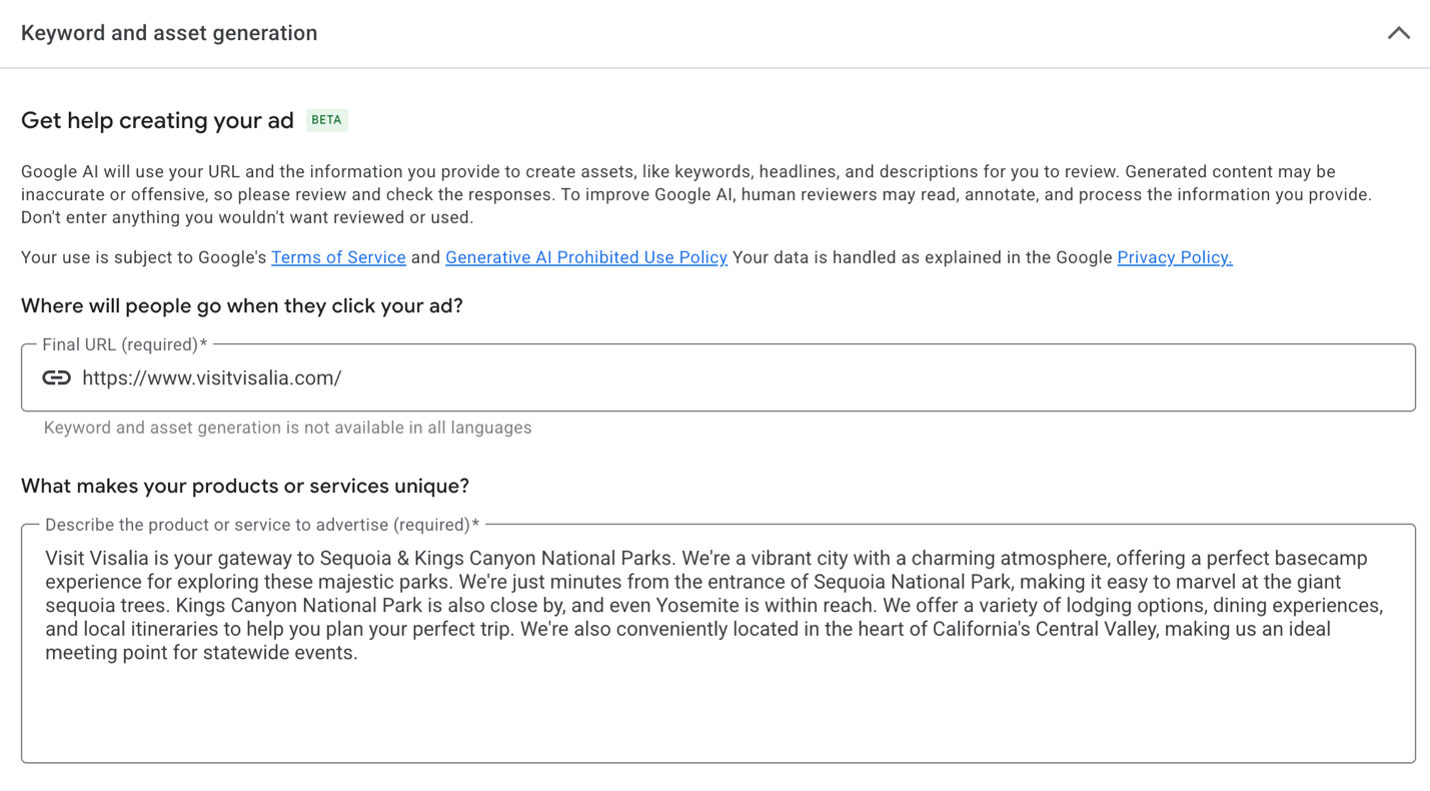
After providing a URL, Google then crawls the site. From there, it generates a comprehensive summary detailing what makes the destination unique, highlighting Visalia, California’s proximity to Sequoia & Kings Canyon National Parks and positioning it as a vibrant basecamp.
While it’s incredibly convenient that the AI can instantly draft an understanding and copy about your lodging, dining, and itineraries, it highlights a major transition: We are no longer building ads or audiences from scratch; we are editing what the AI thinks our brand is.
Other platforms like Meta and Pinterest offer similar “describe your audience” features. These are both more open-ended.
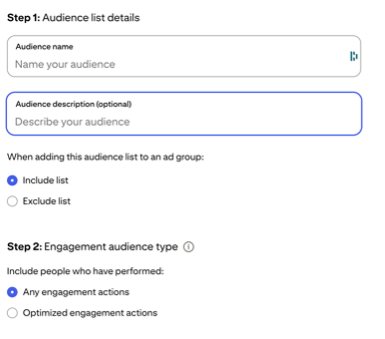
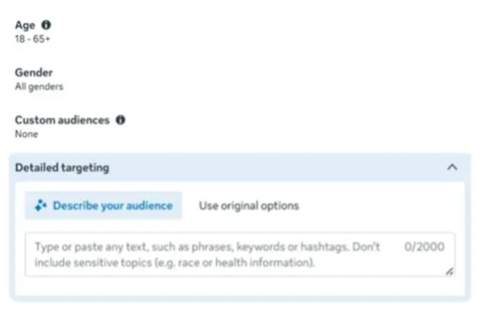
In these setups, it is crucial to remember that automated outputs are only going to be as good as the inputs given to them. We must learn to use descriptive language and ensure due diligence has been taken to provide high-quality audience personas, landing pages, and/or keyword structure.
Without that foundation, audience suggestions become vague. Here’s an example of vague descriptions and their more specific counterparts that will deliver a much more valuable result.
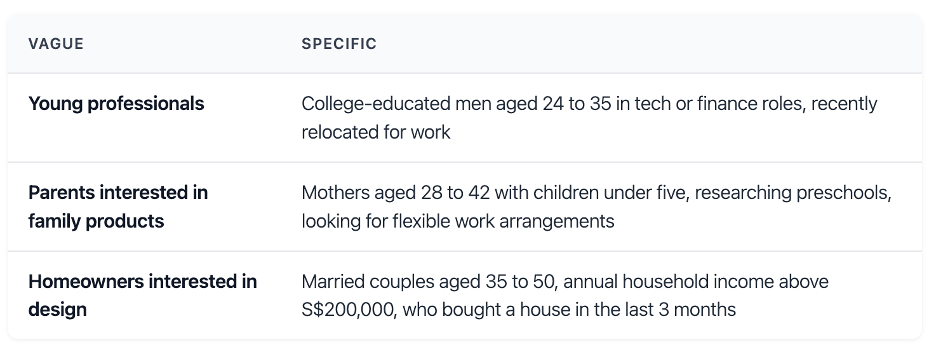
Image Source: Meetsocial’s “Meta ‘Describe Your Audience’ Tool Explained: How Natural Language Targeting is Changing Facebook Ads.”
The Creative Conundrum: Is It Okay To Use AI-Generated Media In My Content?
It’s one thing to let an algorithm decide who sees an ad; it is an entirely different beast to let it decide what they see. In an effort to automate campaigns from top to bottom, platforms like Meta and Google have introduced built-in generative AI image tools. Need a background swap? Done. Want to expand an image to fit a vertical Reels format? The AI will just “fill in the blanks.” We’ve seen cases where these small adjustments work well, and the technology certainly does seem to be improving.
The only problem? When we ask AI to generate an image or video from scratch, the outputs are still frequently landing straight in uncanny valley, and they certainly aren’t showcasing authentic experiences for travelers.
Instead of authenticity, you might get plastic-looking models with slightly too many teeth, or an over-polished image that turns a charming small town in Michigan into a synthetic, live-action movie set. For travel marketing, an industry built entirely on the promise of real experiences, this can be a massive misstep if used without caution.
The data backs up this consumer fatigue. According to Canva’s “The state of marketing and AI 2026” report, a striking 87% of consumers say the best marketing still needs a human touch. Furthermore, 74% of consumers say that they are more likely to purchase from an ad created by humans than an ad entirely generated by AI.
Travelers want to see real hotel rooms, actual local food, and genuine human emotion. They don’t want a hallucinated version of a destination. While AI tools remain helpful for minor adjustments, the core visual must be grounded in reality.
The Verdict: Efficiency vs. Autonomy
Ultimately, AI-powered ad platforms are creating a shift in responsibilities. The goal shouldn’t be to fight the machine, but to feed it better data, establish firm guardrails, and ensure that human creativity still steers the ship. Optimization is a science that can be left to the algorithm, but authentic inspiration is an art that should still belong to us.
 Emma Herrle Digital Marketing Strategist