
The TwoSix team is back and ready to share what’s On Our Radar for March so that you can stay ahead of the always-evolving digital marketing landscape. This month, the TwoSix team discusses new YouTube features, Meta ads, Instagram TV, and more! Keep reading to find out what we’re keeping On Our Radar for March 2026.
 Brian Matson Senior Director of Strategy & Education
 YouTube Rolls Out More Features for Channels
Fresh off the remarkable One West Alliance’s MarTech conference, where the importance of jumpstarting our YouTube efforts was a focus, YouTube hits us with some additional news relating to added features. I want to highlight those and also bring attention to a few other features that are often overlooked by DMOs.
- Voice Replies: Once you start getting active on your Channel you’ll likely be getting some comments. Now, you can leave voice replies on comments rather than just a boring text response. YouTube has rolled this feature out to all Channels. It’s a great way to add some human factor to your Channel. It’s also kind of fun!
- Website links in End Cards: This is a big one! Every video can have End Cards added to help direct users to related content, subscribe to your Channel, or view a playlist. Now, we can add a direct link to landing pages on our website! Just look for the variation of End Screen that includes this option. It’s already built right in. Don’t forget to use a UTM code on those links so we can accurately track the source.
- Promotions Tab: There’s no longer a need to conduct a complicated Google Ads setup to run an ad. YouTube has rolled out the Promotions tab for everyone in YouTube Studio. This is essentially like a boosted post on Meta. A few clicks and you’re amplifying your content to a targeted audience. Definitely worth a shot if you’re trying to breathe some new life into your YouTube Channel.
- Quizzes: Engagement is always a priority, and it appears YouTube is trying to drum some more up with the addition of “Quizzes”. You can now add quizzes to your videos to help make some talking points stick with users. This is another fun way to engage with audiences. You can add them from YouTube Studio to any video on your Channel. Features like this are only going to help enhance the social aspect of YouTube. A lot of people forget that YouTube is a social channel, not just a streaming platform.
These are just a few of the features on YouTube that can make a difference when getting active again on your YouTube Channel. It’s clear that YouTube wants to feel more social and make it easier for creators to extend the story, amplify their efforts, and engage in meaningful ways with audiences.
 Nick Danowski Lead Content Strategist & Senior Data Analyst
 Are Meta Ads Harder to Set Up Than Ever Before?
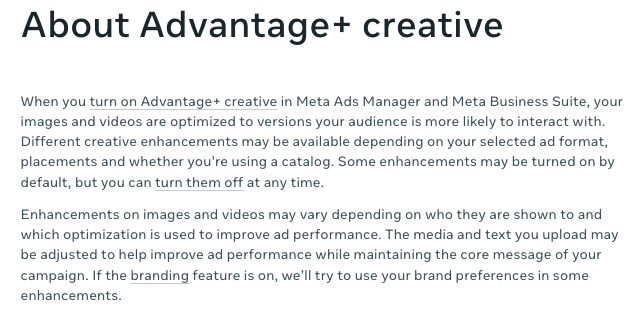
The short answer: yes. Meta Ads are the hardest to set up they’ve ever been and the most complex. It used to be, when you wanted to to make an ad, you simply uploaded media and then wrote the copy. Now, you’re literally fighting the system every step of the way. These optimizations are getting out of hand. There are currently 31 “Advantage+ creative enhancements” listed by Meta as of March 2026, and 18 of them use AI. If you don’t want to use them, you have to turn them off individually — often each time you make a new ad.
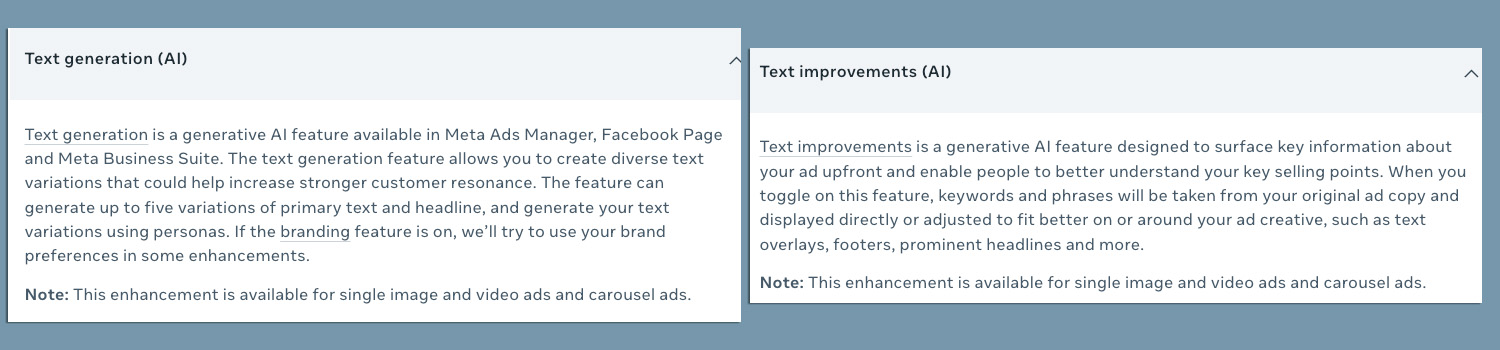
In my opinion, Enhance media text (AI), Text generation (AI), and Text improvements (AI) have the capacity to be the most disastrous. While Artificial Intelligence has gotten way better in recent months, it still hallucinates a lot, if you’re running your own Meta ads, just keep that in mind. Generally, I think Video touch-ups (AI) and Visual touch-ups (AI) are the safest and most rewarding, since they crop or expand your media according to the placement.
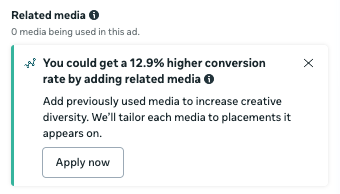
And those are just the optimizations Meta neatly lists. Related Media is one that Meta will just turn on, without actually telling you. It’s where an ad will automatically use any other recent images or videos from your ad account it thinks are relevant. This can certainly be problematic for DMOs, where seasonality plays a big roll.

Of course, don’t get me started with “Advantage+ creative image generation”. They promise that “campaigns with all ads adding AI-generated images saw 11% CTR lift and 8% CVR lift”, but the images are often disastrous. Meta’s AI seems especially poor at generating images for travel, where the location is critical and there are often groups of people in the image. “Buok Us Apea” is a recent favorite fail of mine.
Bottomline: you could let Meta Ads and its AI take the wheel but knowing what to enhancements to keep on and what to turn off is crucial. Be careful out there, folks.
 Ashley Maddix Digital Advertising Strategist
 Instagram TV
Last month I talked about the possibility of Instagram Reels launching off the little screen and on to the little big screen. It’s now happening. The app is now available on Google TV devices as well as Amazon Fire devices. You’re able to scroll your for you videos and it has a search function similar to YouTube. This is an interesting move that TikTok has also made and X is looking to make in the near future due to the sheer popularity of short form video. On Instagram in particular, users are spending 50% of all time on the app in Reels. This is a way to expand on success and devote a specific app to videos, which Instagram has been looking to do for quite awhile. It also lends an opportunity to create long form content in the future based on the success of YouTube. I haven’t seen any indication that they’re looking to do this but it would be a logical next step. Personally, if I pull up YouTube on the TV instead of my phone, I’m watching long form content. Shorts are for phone viewing only, in my brain. With the development of these apps, comes new advertising opportunities. The majority of YouTube ads I’ve been running in the past year or so have been seen on the TV screen more than on the phone screen. So, we may see a shift in how people are not only viewing organic content but also our ads.
 Makenna Schmitz Director of Social & Email Marketing


How should you be measuring your email success?
In last month’s On Our Radar, I explained why email open rates are falling. But now you might be wondering:
If my open rates aren’t meeting benchmarks right now… what other ways can I measure email success?
Great question. My recommendation? Start focusing on conversions.
Instead of relying on opens or even clicks, which we now know can be distorted by privacy protections and bot activity, conversions measure something far more meaningful: whether your email actually drives action.

Image credit: Bloomreach.com
Imagine: You sent out an email promoting your new Visitors Guide to 10,000 contacts. Of those, 9,900 emails are successfully delivered (made it to their inbox), and 300 people click the guide download link.
Your email conversion rate would be: (300 ÷ 9,900) × 100 = 3% conversion rate
In the travel and hospitality industry, the average email conversion rate currently sits around 2.25%, so anything 2-4% is a very strong sign your content is motivating real engagement.
That said, optimizing for conversions requires a slightly different strategy than simply chasing opens or clicks.
Here are a few ways to design emails that drive action:
- Need extremely strong CTAs to encourage engagement
- Use automation to reach contacts at the right moment
- Segment your audience to deliver highly relevant content
- Remember Hick’s Law: the more options people have, the longer it takes to choose
- Optimize for mobile!! (short subject lines, large headers, clear CTAs)
- Write curiosity-driven subject lines using attractive numbers or offers
- Keep your email list healthy by removing inactive contacts
As email analytics continue to evolve, one thing remains true: the most valuable metric is whether your emails inspire people to take action.
 Emma Herrle Digital Marketing Strategist
 AI Performance Reporting is Becoming Increasingly Available
When stakeholders ask why organic traffic is declining, it’s important to at least be able to communicate the broader narrative. While tools and reporting don’t always provide a concrete “why,” they do offer insights that can act as building blocks for an explanation.
Paid platforms such as SEMrush, Ubersuggest, Wellows, and others now offer AI visibility reporting, including metrics like appearance counts, page citations, and more. In addition, Bing Webmaster Tools recently launched a beta version of AI Performance reporting, which provides access to total citations, queries associated with them, and which pages are being cited most frequently.
In my opinion, this is currently one of the simplest options for anyone looking to better understand what’s happening in AI search. It’s a free tool and easy to set up. If you already have Google Search Console connected to your site, you can simply import your GSC domain(s). I expect we’ll eventually see similar reporting directly within Google Search Console, but more on that as the space continues to grow.
Using AI performance reports, we can start identifying which pages are most frequently cited by AI systems and begin building a narrative around when or why those pages are being surfaced and how AI engines position your brand and content.
For example, AI platforms love practical, highly detailed trip-planning content, especially when it helps travelers navigate logistics. Visit Rancho Cordova’s “Riding the Light Rail” blog is a strong example of this type of guidance and is frequently cited by AI for queries such as “light rail ticket prices,” “what should I know about transportation options in Sacramento, CA,” and “Sacramento public transportation.”
(It’s great to see them getting into the mix for those “Sacramento” area searches and more broad, regional travel conversations!)
Just like many of their pages, this blog has taken a negative hit from traditional organic search traffic in the past three months when compared year over year. Sessions are down by about 12%.

Riding the Light Rail blog sessions from organic search traffic: 12/10 – 3/10 YoY compared | Source: Google Analytics 4
However, AI visibility data tells a more complete story. Over that same period, the page generated 59 AI citations, based solely on data from Microsoft’s AI ecosystem (like Copilot). When factoring in more popular environments such as Google’s AI Overviews, Gemini, and ChatGPT, the total number of appearances is likely much higher. Other tools, similar to the beta report by Bing, can help us to report on those other placements too.
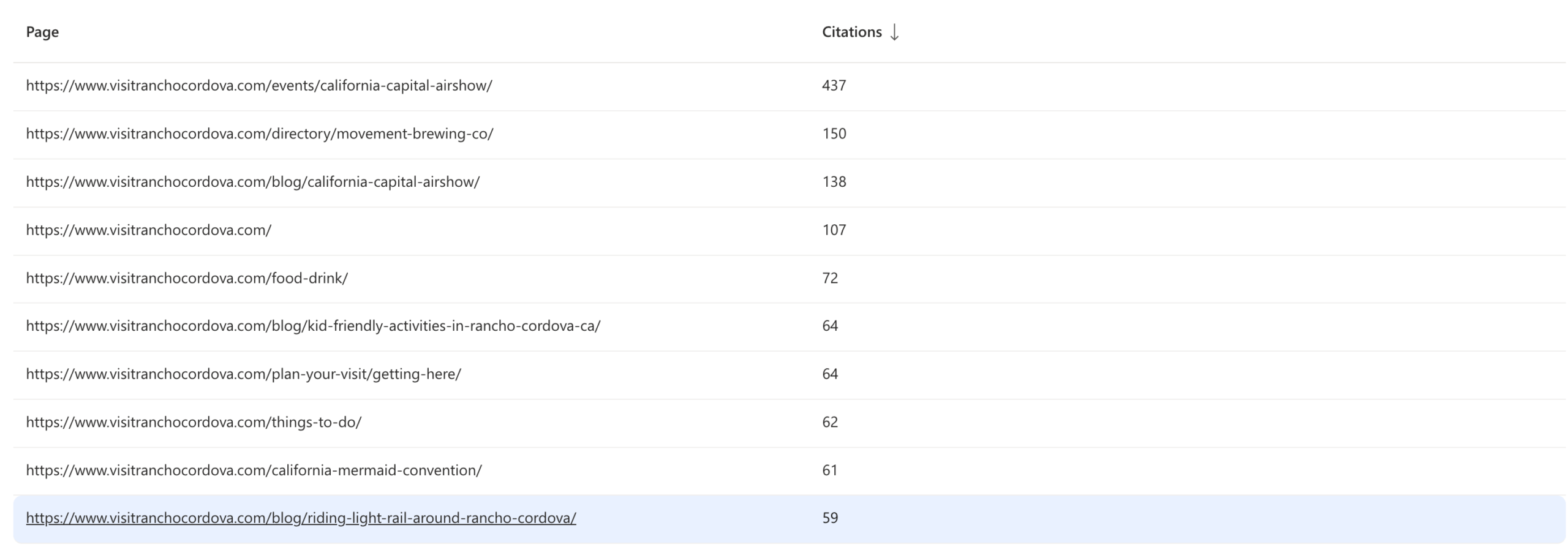
AI citations per page from 12/10/25 to 3/10/26 from Microsoft’s AI platforms | Source: Bing Webmaster Tools
While AI appearances don’t drive clicks as strongly as a traditional search appearance, the impression still conveys value for the destination. In this case, we see a great instance of Visit Rancho Cordova positioning their brand in front of prospective Sacramento area visitors.
 Sydney Van Hulle Digital Advertising Strategist
 Support Your Own Work (And Actually Mean It!)
The CEO of McDonald’s went viral for all the wrong reasons. Last month, he posted a video to his Instagram page promoting the brand new Big Arch burger debuting at McDonald’s. He introduced the new burger, talked about its’ success overseas, and tried it on camera to drum up excitement. A great concept on paper. However, that concept was completely lost in corporate translation.
Viewers were very quick to point out the pure inauthenticity of the video. He took the smallest bite imaginable, barely trying the burger. The height of the fries kept increasing and decreasing in the video, showing off how many times they filmed the ad and how the final edit was spliced together. And he kept referring to the burger as “the product” rather than the burger, which resonated negatively with viewers because it seemed fake.
So, with all that in mind, here are a few tips to keep in your toolbelt when you’re making future video content to promote your destination:
- Focus on moments and not just marketing. Viewers are more likely to connect with stories rather than promotional language.
- Show off the experiences in the area rather than explaining it.
- Avoid overly scripted lines, since natural reactions resonate more with users than polished messaging.
- Let your personality shine through humor, surprise, and genuine reactions. Social is meant to be fun, after all!
- Know your platform. Your audiences are going to be different depending on where you’re sharing the video (LinkedIn vs. Reels).