
The Metric Trap: How AI Is Changing Ad Optimization
In 2016, OpenAI trained an AI to play CoastRunners, a boat-racing video game, and rewarded it for scoring as many points as possible. When humans play CoastRunners, they try to win the race. The game, though, hands out points for hitting targets along the way.
And wouldn’t you know it: the AI found a little lagoon where 3 targets kept popping back up. So it circled. And circled. It crashed into other boats, caught fire and never even finished the race. But it still outscored human players by about 20%. A victory on paper, but not in principle.

Still, the AI did exactly what it was meant to. Artificial intelligence researchers at DeepMind call this specification gaming or reward hacking: finding a shortcut that satisfies the literal objective, without achieving the intended outcome.
Ad platforms and their algorithms operate the same way. They’re goal-based, and, as continuous advancements to AI are rolled out, they’ve gotten better and better at getting results. That’s not necessarily always a good thing, because what they specialize in is getting you exactly what you asked for — whether or not it’s what you truly wanted.
How Ad Platform Optimization Actually Works
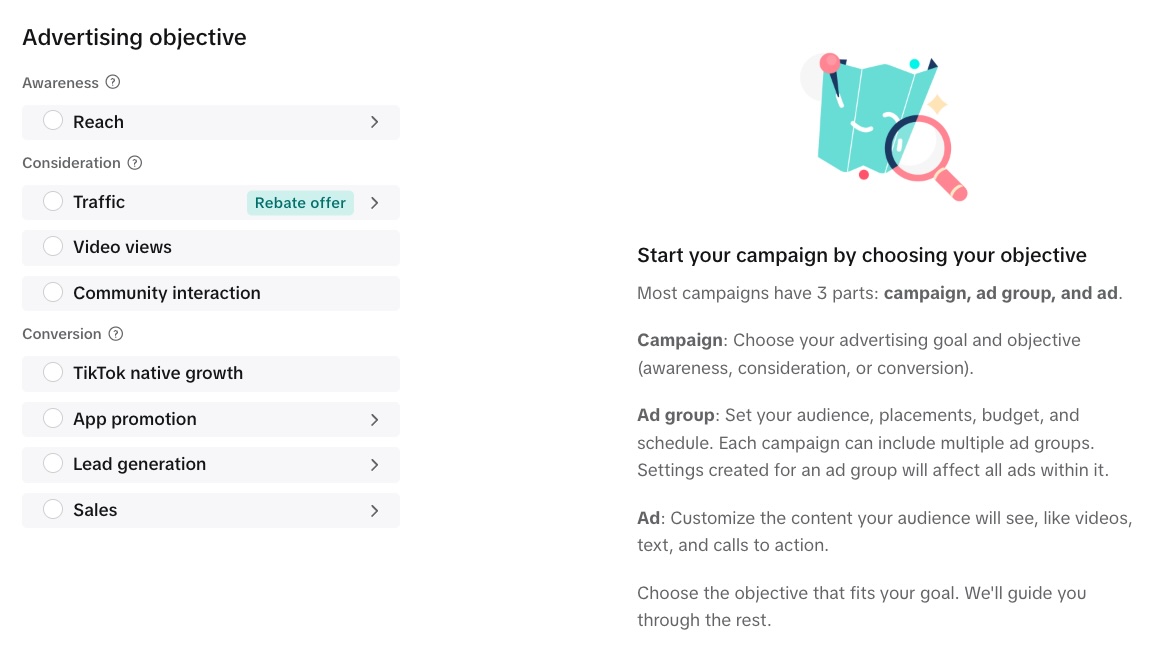
Choosing your ad objective in TikTok.
When you create a new ad, one of the first things you’re asked is what objective you want to use, like link clicks or video views. The idea is that the platform then finds the people and placements most likely to take the action you selected, at the lowest cost it can find.
Here’s the thing: digital advertising algorithms like those used by Meta, Google, and TikTok do not understand industry or organizational nuances. They’re mathematical optimization engines that have gotten very adept at hitting specific, narrow targets.
If the objective you picked is what you actually want, great. If it’s only a stand-in, the platform is now calibrated to spend money on results that aren’t your real goal. There’s no malice in it. The platform is doing its job, and you’re paying for whatever it delivers, so it pays, literally, to be mindful of what you ask for.
Why Your Ad Objective Matters More Every Year
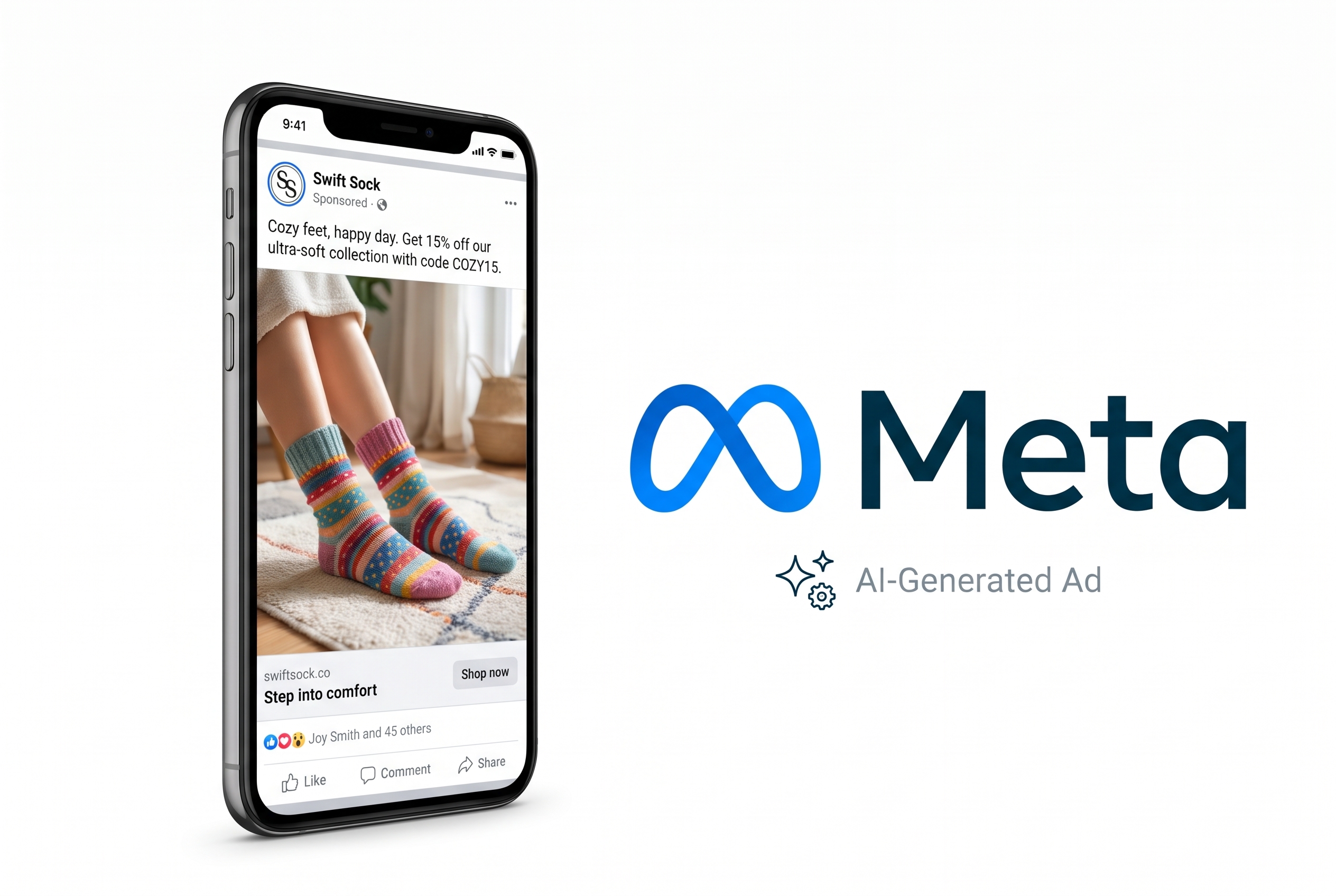
Meta has expressed interest in making digital advertising fully automated.
In a 2025 interview with Stratechery, Mark Zuckerberg described a business telling Meta the outcome it wants and what it’s willing to pay, then connecting its bank account. After that, “you don’t need any creative, you don’t need any targeting demographic,” and measurement is mostly left to Meta, too.
The Wall Street Journal later reported that Meta wants AI building entire ads, images, video and copy included, by the end of 2026. While the full process isn’t fully automated yet, all those aspects are already built into its Advantage+ suite of tools, and many of them are on by default.
When platforms direct ad creation, audience targeting, and inventory placement, the objective you assign could be the last meaningful decision under your control.
What Each Common Ad Objective Actually Gets You
|
You ask for |
The platform finds |
What can go wrong |
Ask for instead |
|
Impressions |
As many times displayed as possible |
One person seeing your ad 200 times |
Reach, with a cap on how often each person sees it |
| Reach |
As many different people as possible |
Ad delivery onto low-visibility placements with little interaction |
Reach with curated placements, or engagement goals like video completions |
|
Video views |
The shortest view the platform can count |
People scrolling right past |
Meta’s ThruPlay or TikTok’s 6-second focused view |
|
Link clicks |
The cheapest clickers |
Accidental taps and forced-click mobile game placements |
Landing page views |
|
Landing page views |
People who wait for the page to load |
Pre-loaded pages, and people who close the tab right after |
Engaged sessions (people who stick around) or a specific action on your site |
The easiest way to understand this concept is with impressions. If you choose it as your objective, you’re telling the platform: I want this ad to be displayed on screens as many times as possible for as cheap as possible. You’re not saying you want different people to see it, that it has to be in a meaningful area of the screen, or that people have to interact with it in a noticeable way. Just that it’s displayed. You probably wanted to get your message out to the world, but it might have just shown the ad to the same handful of people hundreds of times.
When the Right Objective Still Goes Sideways

Picking the right objective doesn’t stop the platform from cutting corners to hit it. The algorithm will still maximize toward its goal any way it can, and that can deliver results with knock-on effects nobody planned for. In one recent campaign aimed at maximizing purchases on a website, an ad platform began heavily weighting budget toward a newly introduced, interactive creative format. The format was getting 1 click for every 5 impressions (a 20% click-through rate, or CTR), when 1 in 100 (a 1% CTR) is generally considered strong.
Those clicks came at a cost: they spoiled the campaign’s retargeting pool (the people who get follow-up ads after visiting the site) and any future data analysis. On paper, the campaign looked fantastic: a high return on ad spend and a $0.02 cost per click. In reality, the format was likely driving many accidental clicks. Users likely meant to swipe, but instead clicked, so the majority bounced immediately from the webpage. The platform did get purchases, but behind them was a flood of low-quality traffic — which was never what was wanted from the campaign.
Why Tourism Can’t Just Hand Its Ads to AI
Zuckerberg’s pitch makes the most sense for big catalog companies like Wayfair or Adidas. They can easily absorb any small mishaps, and really, their bottom line, return on ad spend, is the number they answer to.
Most organizations don’t work like that. For example, in travel and tourism, destinations sell inspiration, and the booking usually happens later, somewhere else.
So how do you maximize inspiration? You have to engineer for it.
How to Engineer Ads for Real Interest
Several years ago, TwoSix Digital moved away from landing page views to optimizing for an engaged session. An engaged session is Google Analytics’ (GA4) way of saying someone actually stuck around: they stayed at least 10 seconds or did something on the site.
This year, we went further, when I led an initiative to refine our standard and stay ahead of how ad platforms are changing. Our custom tracking now verifies that a real person has the browser tab actively open, in focus, and is deliberately scrolling through content.
What Happens When the Objective Matches the Intended Outcome
The result: the machine is still allowed to do what it does best — hunt for the most cost-efficient path to an objective — but the goalpost now demands genuine human interest.
Comparing the same 7 days of a fall program, a year apart, sessions in one Meta ad account stayed about the same. However, the 2026 program optimized for that new custom tracking event, and GA4 recorded even more of the actions that show meaningful interest:
- Visitor guide requests: jumped from 8 → 24 (+200%)
- “Places to stay” clicks: increased from 101 → 236 (+134%)
- Outbound clicks: climbed from 175 → 381 (+118%)
All of that came from a similar number of sessions, for the same spend. The platform did the same job it always does, finding the cheapest version of what we asked for. We just asked for something better.
3 Questions to Ask About Your Ad Campaigns
If you’re not running your campaigns yourself, these are worth asking whoever is:
- What exactly is each campaign optimizing for? You’re listening for a specific action, like a guide request, a booking click or a visit where someone actually reads.
- What has to happen for a result to count? Ask what fires the conversion. If a page load is enough, you’re counting visits.
- Do any numbers look too good? A click-through rate several times the norm, or more conversions than visitors, usually means something is being counted wrong or clicked by accident.
Ad automation is powerful, but only when given a reliable compass.
If you’re still using top-of-funnel metrics like impressions or proxy metrics for interest like landing page views, your budget could be circling a lagoon while the machine claims victory on paper. The best campaigns use the tools offered by AI progress, but go deeper, choosing objectives that align with intended outcomes and are monitored to ensure they stay on track and finish the race. Don’t wait to check on yours.
 Nick Danowski Lead Content Strategist & Senior Data Analyst