

The Cookie Crumbles (Or Doesn't), and the Data DMOs Actually Need Right Now
We’ve all been subjected to the most exhausting “will they or won’t they” saga in digital marketing history. The perpetual, almost-dead third-party cookie.
For years, Google had the whole industry scrambling. They were going to phase out cookies in Chrome by 2022. Then 2023. Then 2024. Then, in a plot twist that left marketers everywhere staring blankly at their screens, Google just… didn’t. In July 2024, they scrapped the deprecation plan entirely. The cookie would live on.
But before you close out of your ad accounts and go back to business as usual, remember, Google doesn’t speak for the entire web. Safari and Firefox have already been blocking third-party cookies by default since 2020. Privacy regulations are constantly changing outside of the US. Platform targeting – especially on Meta – is getting noisier, more automated, relying more and more on opaque AI learning models. And web-based pixel audiences? They can take forever to accumulate enough data to actually move the needle.
The real question was never really “when are cookies dying?” It was always “what’s your actual best data?” Whether Google keeps flipping the switch or not, here are the audience sources DMOs need to be leaning into right now to keep some semblance of creative control.
1. Your Email List (Yes, Really)
This one keeps coming up for a reason. Most DMOs treat their subscriber lists primarily as an email blast tool, but it is quietly one of the most powerful, quick-to-activate ad targeting audiences sitting in your toolkit.
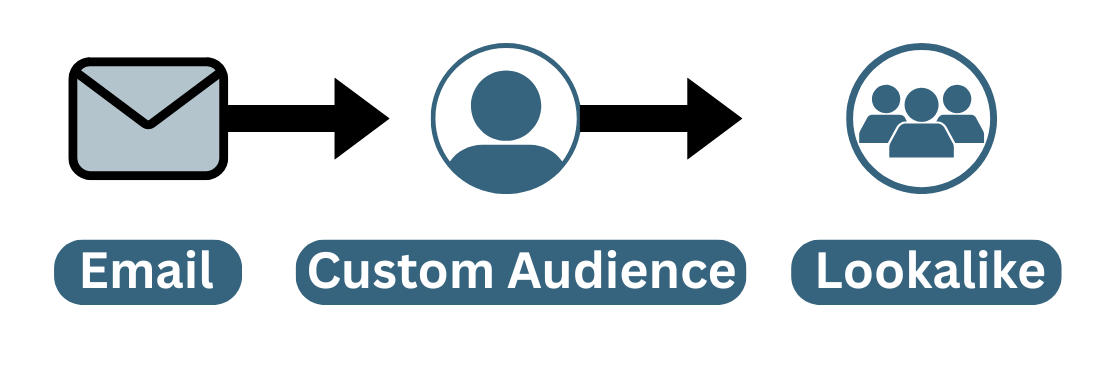
Over on Meta, you can upload that list directly as a Custom Audience to serve ads to your existing subscribers. Better yet? Use it as a seed for a Lookalike Audience. Meta will analyze the traits of people who already care enough about your destination to opt-in, and spit out users who look just like them. Unlike pixel-based web audiences, you don’t have to wait for this list to “learn.” It’s ready right now, it’s entirely first-party, and it completely bypasses whatever browser policy is trending this week.
If you’re segmenting this list by season, visitor type, etc., you’re sitting on a goldmine. Fall foliage subscribers instantly become a custom fall campaign audience. Families who signed up for a summer guide become a seed for reaching spring break and early summer travel promotions.
2. Partner & Co-Op Email Lists

Don’t stop at your own backyard.
Think about the broader ecosystem: regional tourism boards, hotels, event organizers, weird local attractions. If they’ve built up their own opted-in subscriber bases, there’s massive potential for co-op audience sharing. A regional board might have a list full of travelers who fit your exact target demographic but haven’t hit your specific zip code yet.
Sure, this takes some relationship-building and basic consent checks, but opted-in, first-party data from a trusted partner is a genuinely rock-solid foundation for paid targeting (and way better than trusting machine logic to find your audience).
3. Engagement Audiences

If you manage Meta ads, you know the platform wants to automate everything. But building engagement audiences from people who have already interacted with your content gives you some of the power back.
For DMOs churning out consistent social content, this is a rich pool. We’re talking people who actually watched a chunk of your Reels, clicked past ads, or engaged with a post. These aren’t anonymous ghosts scraped from random web browsing behavior. They’re actual humans who have already shown intent, captured in a totally cookieless, consent-friendly way.
Retargeting video viewers is an easy next step that a lot of destinations are still sleeping on.
4. CRM & Past Visitor Data

If you or your partners have any kind of CRM, like a database of past visitors, event attendees, hotel guests, that is your strongest possible audience seed. Past visitors are historically more likely to return, making them the most accurate lookalike source you have, as well as valuable seed audiences for a retargeting campaign.
The same upload-and-lookalike logic applies here. A clean, segmented list of past visitors dumped into Meta as a Custom Audience can power retargeting campaigns and hyper-targeted lookalikes without relying on a single cookie.
The Bottom Line
Notice the trend here? These strategies are all based on real signals from actual humans who have a genuine connection to your destination, not inferred behavior regurgitated by an ad algorithm. That is where the entire industry is heading, regardless of whether Google ever actually pulls the plug.
Cookies might be surviving another day. But DMOs who spend the next year building out these permission-based, first-party audiences will be running drastically better campaigns today, and won’t have to panic when the tech giants inevitably change their minds again.
 Scout Delicato
Lead Digital Marketing Strategist