

6 Things DMOs Can Do Right Now to Increase their AI Visibility
While ChapGPT popularized generative AI use for the average person in November 2022, it took a few years for most organizations to start noticing their organic search traffic dropping. For Destination Marketing Organizations specifically, in Q1 2025, data I compiled showed that organic search traffic was down 5-10% year-over-year. For a while, the best way to appear in AI results was to simply keep following Search Engine Optimization (SE0) best practices. While this approach still works, there is now the emerging field of GEO (Generative Engine Optimization), which focuses on increasing the number of AI citations. It’s the shift from “How can I get more search engine traffic?” to “How can I get become more visible in AI results?“ To help you get a jumpstart on GEO, here are 6 things DMOs can do right now to increase their website’s AI visibility:
1. Clearly Structure Your Content for Both Humans & Machines

Visit Traverse City has a “General FAQs” on the home page that is formatted with simple questions and simple answers. Formatting content as question-and-answers or as FAQs remain TwoSix Digital’s top recommendation for how to improve your AI visibility.
Formatting and structuring your content are the easiest ways to begin your GEO journey. Start with a H2/H3 heading that states the topic clearly and immediately follow up with the most pertinent information. Flowery language and additional context should come later, if it’s included. Remember, users are asking questions and AIs need to answer them quickly, so make it easy for the machines to cite you directly.
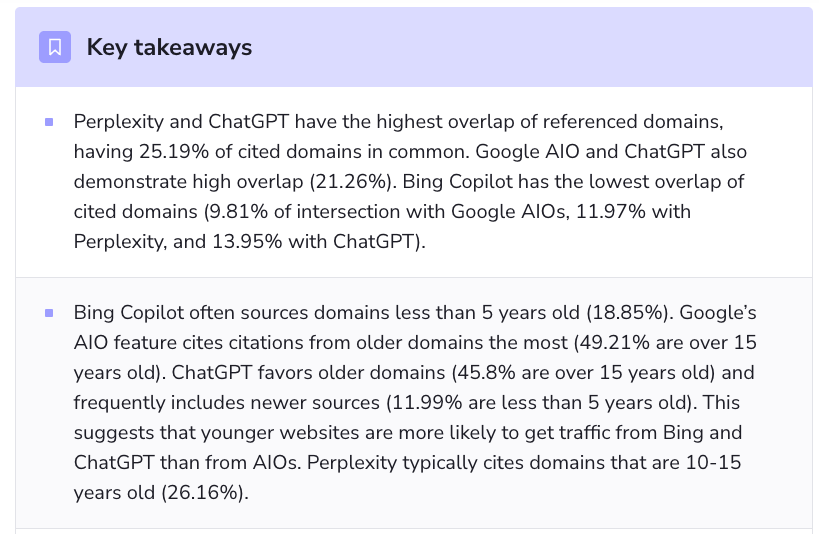
Example of key points with bullet formatting for GEO, from SERanking’s research into different AI search engines.
Along with crafting FAQs for the destination, comparison tables, bullet points, listicles, and step-by-step structure are all recommended methods of formatting for GEO. Key takeaways or top-of-page summaries also appear to work well. Make it easy to parse and show your expertise.
2. Quickly Test Your Content: Is It Structured for Rich Results?
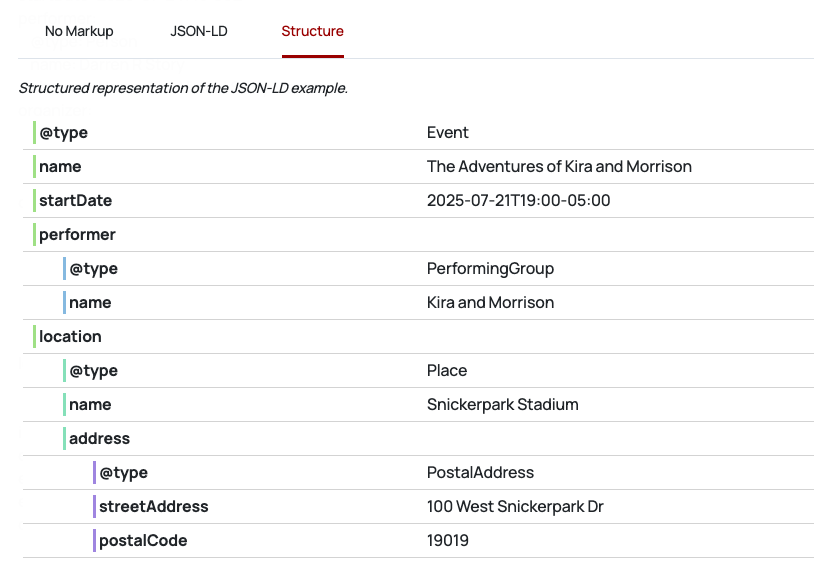
Example of what an “Event” type of Schema will contain, telling any machines crawling the internet the start date, performer, location, and other important info.
Although formatting on the frontend will improve your AI visibility, formatting on the backend by ensuring Schema is used properly is also crucial. Schema is code that’s in the background of webpages that makes it easily readable for machines. It’s just a standardized way of formatting certain code. Originally primarily used for search engines, most AI tools use it, too, especially Google’s AI Overview.
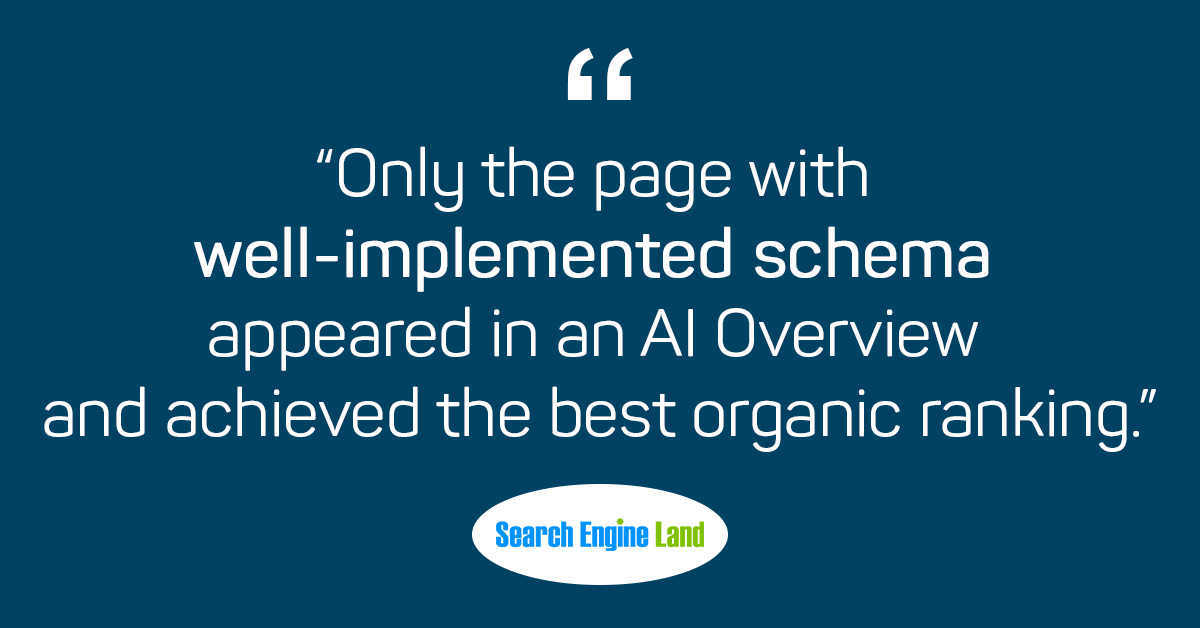
Its importance is striking. Search Engine Land did a small test with three single-page sites in September 2025 and found that “only the page with well-implemented schema appeared in an AI Overview”.
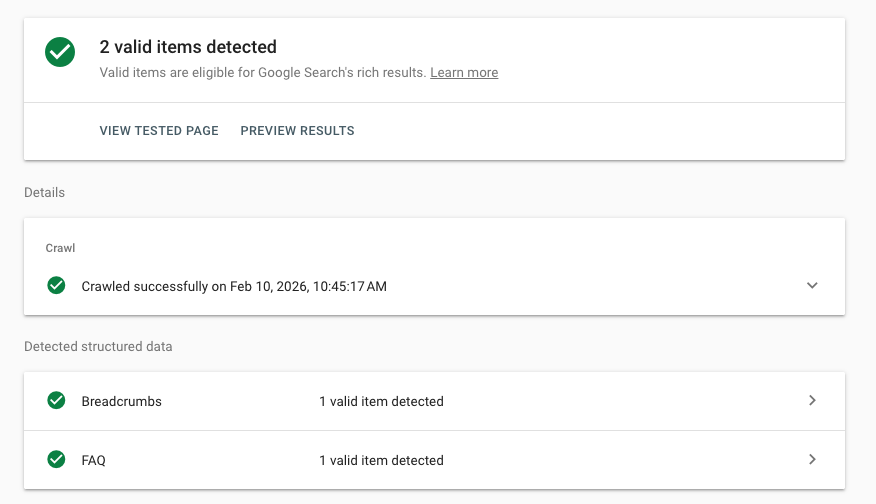
If a page contains an FAQ, ensure that Google’s Rich Results Test can detect it.
While we don’t recommend DMO staff attempting to fix a page missing schema mark-up, you can still flag pages missing it for your web developer to tackle. You can easily test webpages with validator.schema.org or Google’s Rich Results Test. Ensure blogs and articles come up as “Article”, FAQs show as “FAQPage”, How-To content is marked as “HowTo”, events pull as “Event”, and listings contain “LocalBusiness”.
3. Talk About Your Competitors
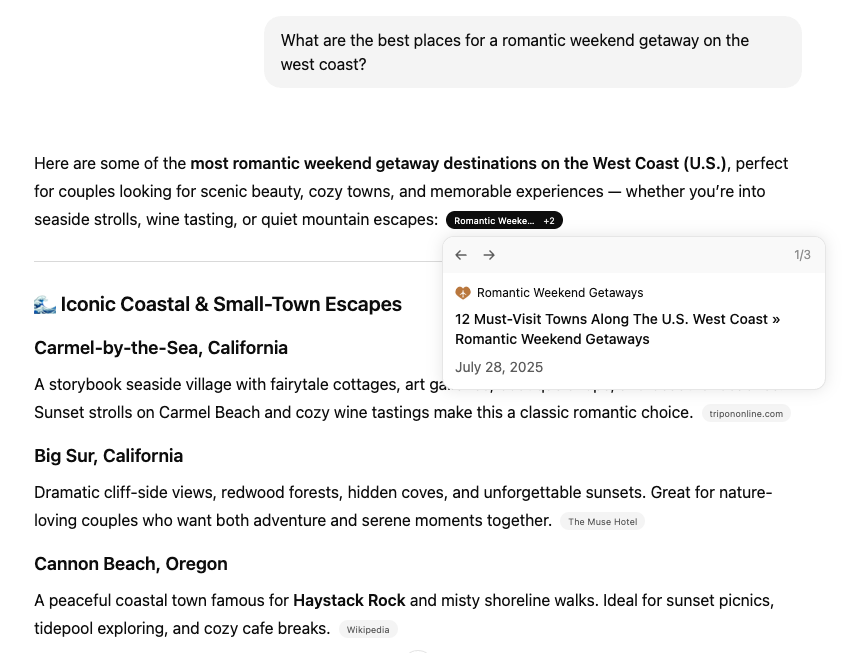
Example of a listicle cited by ChatGPT to a user travel query.
When it comes to GEO, one of the best uses of a destination’s time is improving discovery. When it comes to AI, most discovery is the result of superlatives, such as “what are the best places to take a dog-friendly vacation in the US?” or “where can I find the best birding in the midwest?” And typically, generative AI cites comparative content, even when users don’t ask such questions.
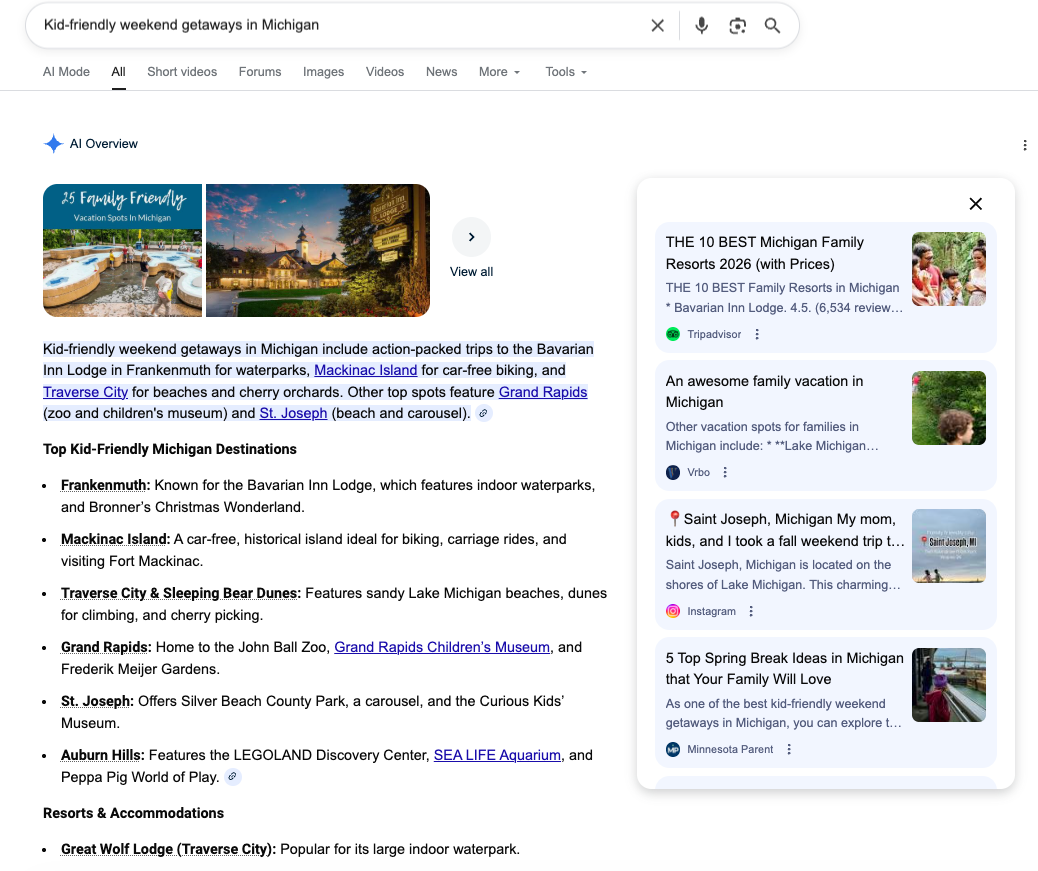
Example of multiple listicles or comparative content cited by Google’s AI Overviews, such as “THE 10 BEST Michigan Family Resorts 2026 (with Prices)” and “5 Top Spring Break Ideas in Michigan that Your Family Will Love”
In destination marketing, we’ve generally stayed away from mentioning the competition, but it’s becoming clear that destinations who begin to create content that around “best X places” or “top N of” content will have an early edge on those who don’t. They will sculpt the narrative on why they should be the top choice. Don’t get left behind!
4. Start Leveraging Reddit & Forums for Your Destination

A tourism query in Perplexity shows that Reddit was cited the most. Out of 10 total sources, 3 were from Reddit, 1 was from Facebook, and the rest were hiking or sites were dedicated to traveling with pets. No DMOs were cited.
Although the statistics may vary from study to study, it’s clear that User-Generated Content (UGC) is a rich source of information for generative AI. I’ve personally seen such social or forum cited so many times, but the data backs it up.
According to Try Profound research based on dataset of 680 million citations in August 2025:
- Google AI Overviews’ top sources are Reddit (2.2%), YouTube (1.9%), and Quora (1.5%)
- Perplexity’s top sources are Reddit (6.6%) and YouTube (2.0%)
- ChatGPT’s top sources are Wikipedia (7.8%) and Reddit (1.8%)

Most Google searches related to tourism have Reddit results, along with a “Discussions and forums” section. If these are part of the top results, it follows that they’re likely weighty parts of generative AI’s understanding of the query.
If UGC is where many AI platforms source information, as destination marketers, we need to be there. Get into conversations about your destination. Answer or pose questions on your local subreddit. Start to seek out questions by Googling broad queries for demographics, such as families or couples, and types of vacations, such as spring break or weekend getaways. Look to Reddit the most but also try Quora and Facebook Groups. If you choose to, reply to them honestly and thoughtfully, and there’s a good chance you’ll feed into AI’s understanding of the topic.
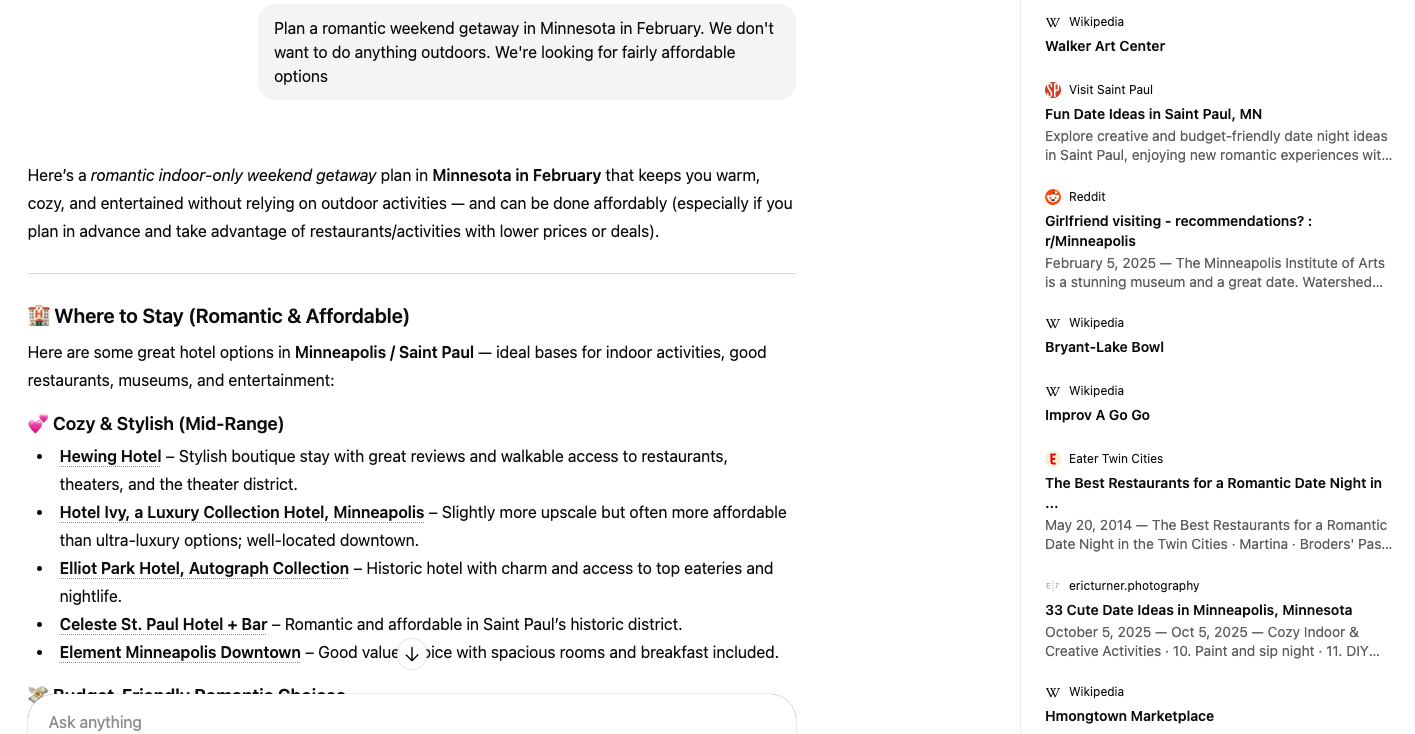
ChatGPT heavily leverages Wikipedia and Reddit. In this example, of the top sources, Wikipedia was cited 4 times and Reddit was cited once. Out of the 40 total sources, a Facebook Group was also cited. However, for this specific query, ChatGPT considerably borrowed from DMOs, as their websites were cited 9 times. Those that used keywords such as “budget” (affordable was in the query) and “cozy” (indoor was in the query) were used the most.
However, you shouldn’t answer everything yourself. The more voices, the better. So, instead, encourage those who stop by your visitors’ center or visiting influencers to chime in. But if you just posted a romantic weekend blog, there’s your reminder to conduct a search and see where you can insert your destination into the conversation. Note that editing Wikipedia is not recommended, due its strict rules.
5. Create GEO Social Media Videos
According to BrightEdge Research, Google AI Overviews had 29.5% YouTube citation share, Google AI Mode had 16.6% YouTube citation share, Perplexity had 9.7% YouTube citation share, and ChatGPT had 0.2% YouTube citation share (but growing 100% week-over-week).
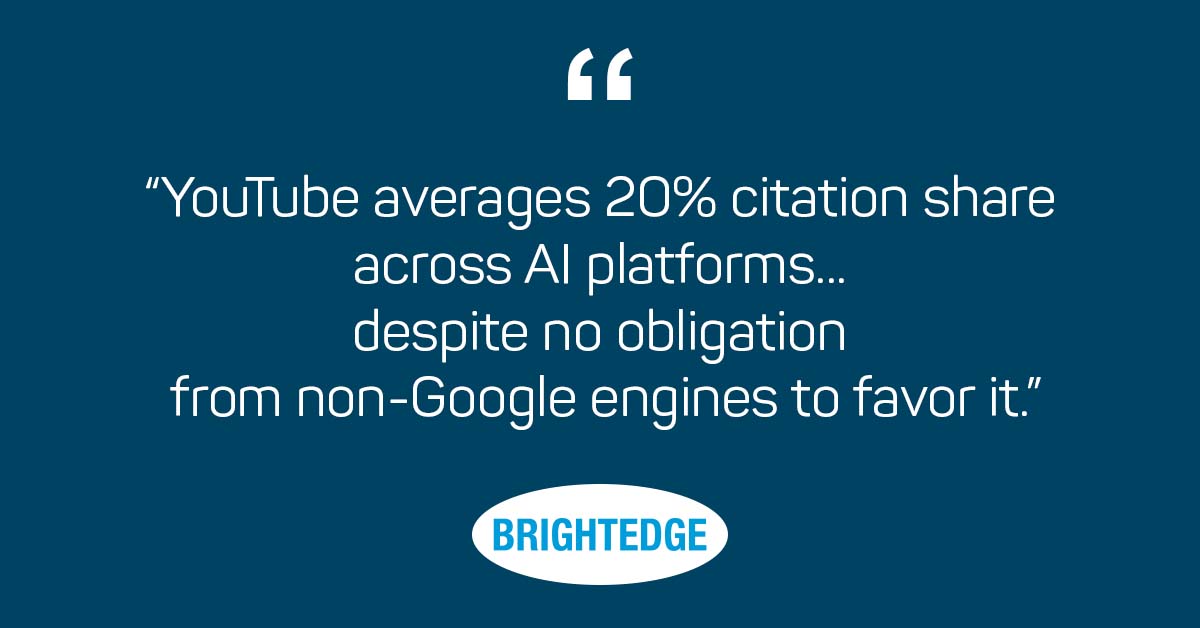
While forums are important, it’s becoming increasingly clear that videos are where AIs are currently drawing the most information. BrightEdge’s research from May 2024 – September 2025 claims that YouTube averages 20% citation share across all platforms. Then in January 2026, Adweek wrote “Bluefish found that YouTube appeared as a cited source in 16% of LLM answers over the past six months, compared with 10% for Reddit”.

In this Google AI Overview, a YouTube video is cited, along with a Facebook video — made by Fox59 News and LittleGuide Detroit, respectively. Shoutout to our friends at Spencer County Visitors Bureau, who are also cited.
In my own experience, I see YouTube, Instagram, Facebook, and TikTok videos consistently cited by Google AI Overviews. I very rarely see an image, album, or carousel post cited. And it makes sense — AI craves first-hand experience, and videos provide exactly that. YouTube ranks #1 since it’s the biggest library of thorough content made by subject matter experts, and, of course, it’s already meticulously optimized for search.

A Google AI Overview about top ski resorts in Colorado sites 4 YouTube videos (“Colorado’s Top Five Ski Resorts”, “Top Colorado Ski Towns and Resorts Near Me”, “We Visited the Best Ski Resort in Colorado”, and “Top 6 Ski Resorts in Colorado You NEED to Visit…”), along with 1 Instagram Carousel that features a text overlay as the first image.
DMOs can take advantage of this new paradigm by creating videos with clear text overlays at the beginning using keywords — like how you would optimize a landing page for SEO. Critically, create answer-first content, as they should answer the question users are asking. It’s crucial to then utilize narration and/or text overlays to provide additional context and verbiage for the AIs to source. AI models use transcripts, titles, captions, and metadata such as location to both extract information and provide verification of authority. Include all the info you can that way and encourage any social media influencers visiting to do the same.
6. Cite Sources & Statistics in Website Content
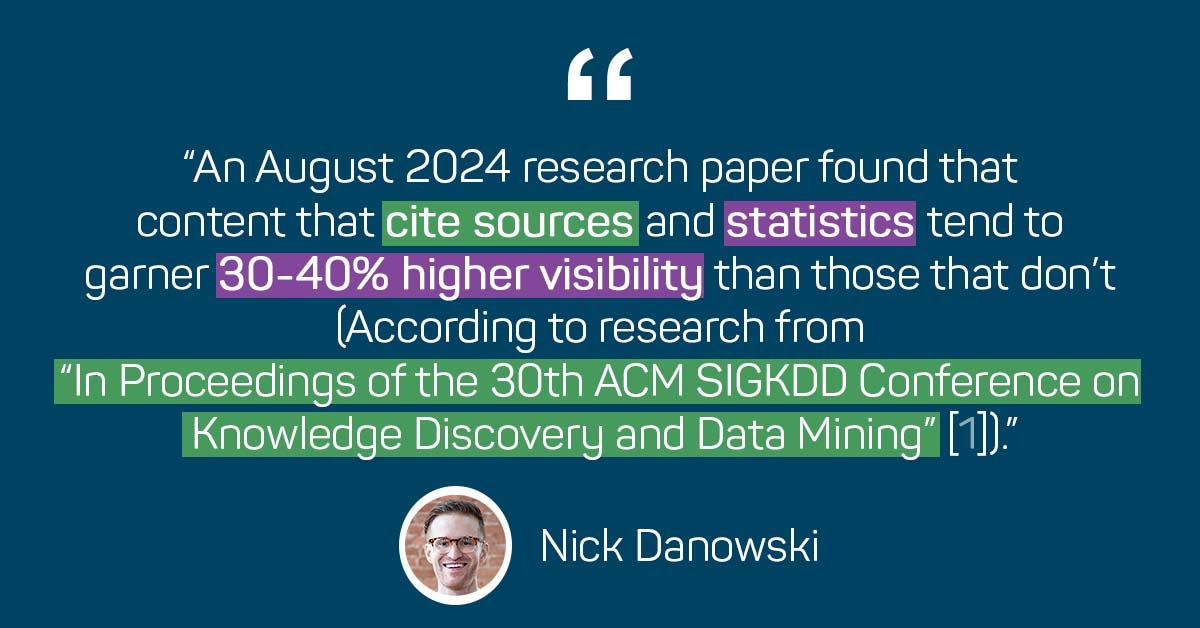
When it comes to what DMOs can do to increase their AI Visibility, I’ve saved the easiest for last. An August 2024 research paper found that content that cite sources and statistics tend to garner 30-40% higher visibility than those that don’t (According to research from “In Proceedings of the 30th ACM SIGKDD Conference on Knowledge Discovery and Data Mining” [1]). It’s that simple to do. You can either lead with the source (such as “According to…”) or end with citation. Links to the source are essential. While statistics and sources tend to go hand-in-hand, you can always quote or cite subject experts (think park rangers, chefs, heads of museums, etc.), as authoritative statements also increase visibility. AI is programmed to be as accurate as possible, and these tactics leverage that imperative.
From clearly defined formatting and ensuring backend structure, to listicles that address destination niches and creating social content to be parsed by generative tools, there are so many things that destination marketers can begin to do right away to increase their AI visibility. While most of GEO is still in its beginning stages, always thinking about the questions that you’re answering when you create content is sure to remain a consistent best practice. The narrative that AI tools are forming now will influence opinions and the conversation around destinations for years to come, so early adopters of GEO are almost certain to enjoy long-term benefits.
Interested in discussing what you can do in the world of GEO? Interested in tracking your AI citations or discovering prompts to capture? Reach out to us for coaching and SEO/GEO services.

Lead Content Strategist & Senior Data Analyst